Building Knowledge

PURPOSE
Ensure every student builds the knowledge
they need to understand and engage with the world around them.
MISSION
Advance student comprehension by building student knowledge.
APPROACH
We create and freely share knowledge-rich curriculum grounded in the Science of Reading that builds background knowledge, strengthens vocabulary and language, and accelerates reading comprehension for all learners.
Every child deserves access to the knowledge that unlocks learning.
Research shows that background knowledge is one of the strongest predictors of reading comprehension.
We envision an Arkansas where every child, regardless of income or ZIP code, has EQUITABLE access to the knowledge needed to thrive in school and beyond.
Guiding Principals
Our resources are thoughtfully designed around seven guiding principals that support grown and inspire a lifelong love of learning.
01 Educational Equity
Regardless of a student’s socioeconomic background or the language spoken at home, units of study should be designed with the assumption that students may have limited background knowledge. Essential vocabulary and foundational concepts should be intentionally developed throughout the sequence of lessons.
02 Less is More
Elementary teachers have limited time to devote to knowledge-building subjects such as science and social studies. Teachers need short lessons that fit within their schedules and help students gain and retain essential knowledge.
03 Integration
Lessons within a unit of study must be integrated with the application of disciplinary literacy skills: reading, writing, speaking, and listening.
04 Content then Standards
Content drives standard selection. Students use the skills described in the standards to learn the content.
05 Inquiry
Both teacher and student-generated questions are central to student learning.
06 Evaluating Sources
Students need opportunities to evaluate primary and secondary sources as they engage in inquiry.
07 Knowledge is Transferable
A student’s personal knowledge provides a framework for organizing incoming information and guides them as they read through any text. Knowledge helps improve reading comprehension across all subjects.
We are building a Knowledge Library.

Our inaugural collection:
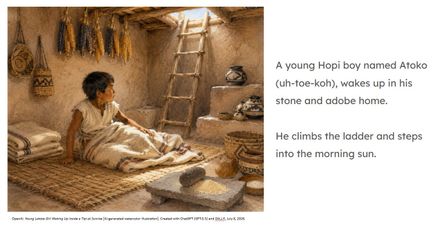
Stories that Shape Us: K-2 History Lessons
Program Scope
Kindergarten Collection: 60 lessons (30 minutes each)
Grade 1 Collection: 65 lessons (40-45 minutes each)
Grade 2 Collection: 70 lessons (40-45 minutes each)
BUILDING
Content Knowledge

GROWING
Word Knowledge
INCREASING
Knowledge of Text Structure